

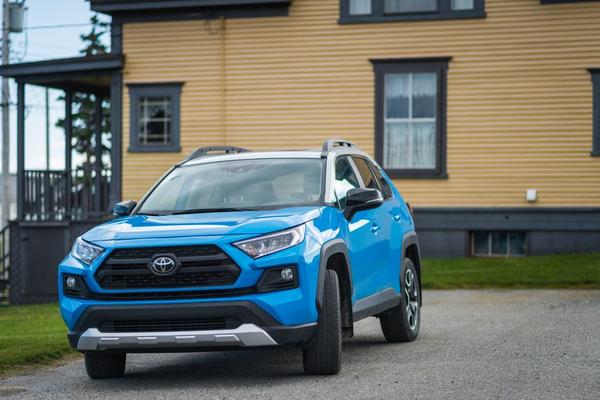
Choosing between the Toyota RAV4 Hybrid and Honda CR-V Hybrid sounds simple until you sit in both. Each promises low fuel bills, five seats and everyday versatility, but they prioritize different things. For U.S. shoppers comparing 2026 models, the redesigned RAV4 puts efficiency, power and technology up front. The CR-V counters with generous rear-seat room and a relaxed, practical cabin. The better choice depends less on brand loyalty than on how you actually use your SUV.
2026 Toyota RAV4 Hybrid vs Honda CR-V Hybrid: The Quick Verdict
The RAV4 Hybrid is the stronger starting point if fuel economy, available power and purchase price lead your shortlist. Every 2026 RAV4 uses either a conventional hybrid or plug-in hybrid powertrain, and the regular hybrid starts at a lower MSRP than the CR-V’s least expensive hybrid.
The CR-V Hybrid deserves serious consideration if adults frequently occupy the back seat, you prefer its straightforward controls, or its seating position feels more comfortable. Neither vehicle is automatically the better family car; your passengers and cargo may decide the contest.
MPG: How Much Fuel Can You Actually Save?
For the Toyota RAV4 Hybrid vs Honda CR-V Hybrid MPG comparison, match the same drivetrain rather than mixing front-wheel-drive and all-wheel-drive trims. The 2026 RAV4 Hybrid is rated at up to an EPA-estimated 43 mpg combined with front-wheel drive; some AWD versions achieve 42 mpg combined. The 2026 CR-V Sport Hybrid returns an EPA-estimated 40 mpg combined with front-wheel drive or 37 mpg with AWD. The CR-V TrailSport Hybrid AWD is rated at 35 mpg combined.
Those gaps matter, although they are smaller in dollars than a headline MPG figure might suggest. At 12,000 miles annually, a 43-mpg RAV4 uses roughly 279 gallons, versus 300 gallons for a 40-mpg CR-V. At an illustrative $3.50 per gallon, that is about $73 saved per year. For 42-mpg versus 37-mpg AWD versions, the difference rises to about $135.
Power and Driving Feel
Toyota’s 2026 RAV4 Hybrid combines a 2.5-liter gasoline engine with electric assistance for 226 horsepower in front-wheel-drive form or 236 horsepower with AWD. The CR-V Hybrid uses a two-motor system rated at 204 horsepower. On paper, the Toyota has the advantage, particularly when merging or passing with a full load.
Numbers do not tell the entire driving story. The Honda’s electric-motor-focused delivery can feel smooth and responsive at neighborhood speeds, while the Toyota’s revised hybrid system offers reassuring acceleration. During your test drive, include a highway entrance ramp, rough pavement and a slow parking maneuver. Notice engine sound under hard acceleration and how naturally the brakes respond when stopping.
For winter driving, evaluate the exact AWD configuration and tires, not the badge alone. All-wheel drive can improve traction when accelerating but cannot overcome poor tire grip when braking.
Passenger Comfort and Hybrid Cargo Space
Here the CR-V makes its strongest case. Honda lists approximately 41 inches of second-row legroom in the 2026 CR-V, compared with 37.8 inches in the RAV4. That extra measured space can be useful for tall teenagers, rear-facing child seats or adults riding behind tall front occupants. Seat shape still matters, so take your regular passengers to the dealership.
The hybrid cargo space comparison is closer than those rear-seat numbers suggest. The 2026 RAV4 Hybrid offers about 37.8 cubic feet behind its second row and 70.4 cubic feet with the rear seats folded. The CR-V Sport and Sport-L Hybrids provide approximately 36.3 cubic feet behind the rear seats and up to 71.8 cubic feet with them folded. The CR-V Sport Touring Hybrid has less space behind the rear row, at about 34.7 cubic feet.
Imagine a weekend involving a stroller, two suitcases and a grocery stop. Instead of relying on cubic feet, bring the stroller to both showrooms. Test whether it fits lengthwise without removing a wheel, and whether the remaining floor space holds the bags. Cargo opening shape, floor height and seat-folding ease can outweigh a small difference in published capacity.
Technology and Safety: Compare What Is Standard
The 2026 RAV4 features a standard 10.5-inch touchscreen, an available 12.9-inch display and a standard 12.3-inch digital instrument cluster. Wireless Apple CarPlay and Android Auto compatibility are offered throughout the range. Toyota Safety Sense 4.0 brings updated driver-assistance technology, including collision-warning and lane-support functions.
The 2026 CR-V uses a standard 9-inch touchscreen with wireless smartphone integration. Higher trims add a 10.2-inch digital instrument display, while the Sport Touring Hybrid offers Google built-in. Honda Sensing includes functions such as adaptive cruise control, lane-keeping assistance and collision-mitigation braking.
Price, Trims and Long-Term Value
For 2026, Toyota lists the RAV4 Hybrid LE from $31,900 before destination and other charges. Honda lists the CR-V Sport Hybrid from $35,630 before destination and other charges. That is a meaningful entry-price gap, but it is not a like-for-like equipment comparison: the Honda Sport Hybrid includes amenities that may require a more expensive Toyota trim.
To assess hybrid SUV value, build two vehicles with comparable AWD, heated seats, driver assistance, wheels and convenience features. Then compare actual dealer quotes, financing rates, insurance premiums and estimated maintenance. Do not assume the less expensive window sticker will always produce the lower five-year cost.
Which Hybrid SUV Fits Your Routine?
Choose the RAV4 Hybrid if your priorities are maximum rated efficiency, stronger advertised power or lower-cost access to a new hybrid compact SUV. It is particularly compelling for drivers who cover substantial mileage and rarely fill the back seat with tall passengers.
Choose the CR-V Hybrid if rear-seat accommodation and an easygoing cabin rank above a modest annual fuel saving. Families regularly transporting adults or fitting child seats may find its dimensions more persuasive than a few extra MPG. For either model, compare real cargo loading and total ownership costs before committing.
Frequently Asked Questions
Which gets better gas mileage, the RAV4 Hybrid or CR-V Hybrid?
For comparable 2026 front-wheel-drive versions, the RAV4 Hybrid leads with up to 43 mpg combined versus 40 mpg for the CR-V Hybrid. AWD figures depend on trim, so always check the specific model’s EPA rating.
Which hybrid SUV has more cargo room?
The RAV4 Hybrid offers about 37.8 cubic feet behind the back seats, ahead of the CR-V Sport Hybrid’s approximately 36.3. With rear seats folded, the CR-V Sport Hybrid offers slightly more maximum volume. The Sport Touring’s figures differ.
Do either of these hybrids need to be plugged in?
No. The standard RAV4 Hybrid and CR-V Hybrid charge their batteries through their gasoline engines and regenerative braking. Toyota also sells a separate RAV4 Plug-in Hybrid designed for external charging.
Which is better for families with tall passengers?
The CR-V Hybrid has the measurable rear-legroom advantage. However, cushion shape, front-seat adjustment and child-seat fit matter more than one dimension, so try both interiors with your passengers.
Final Thoughts
The Toyota RAV4 Hybrid wins several important numbers: efficiency, horsepower and entry MSRP. The Honda CR-V Hybrid offers a persuasive alternative for people who value second-row comfort and practical everyday usability. Shortlist trims with the equipment you actually need, drive them on the same route, and test your real cargo. The right hybrid SUV is the one that makes your usual week easier, not simply the one with the best specification sheet.
