

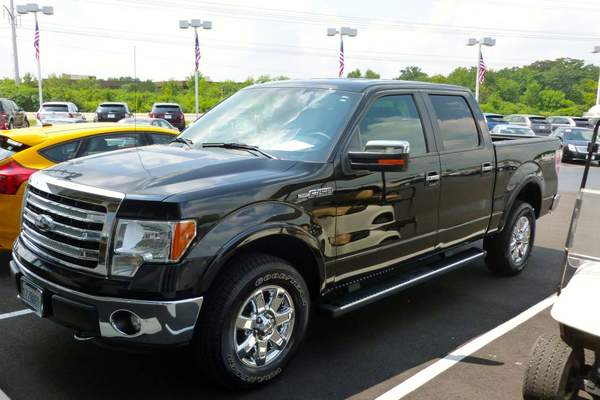
Choosing between the Ford F-150 and Ram 1500 is less about finding the universally “best” pickup and more about matching a truck to the work it will actually do. Both offer powerful engines, roomy crew cabs, and advanced technology. But their strengths diverge: the F-150 emphasizes maximum capability and work-friendly features, while the Ram makes a persuasive case for everyday comfort.
This comparison focuses on 2026 U.S. models. Remember that engine, cab, bed, axle ratio, drivetrain, and options can dramatically change what each truck can carry or tow.
Ford F-150 vs Ram 1500: The Quick Verdict
The F-150 is the stronger starting point for buyers who regularly tow heavy trailers, carry substantial bed loads, or want a full hybrid powertrain. Its available onboard electrical power is another advantage for job sites and camping.
The Ram 1500 stands out for its composed ride, refined cabin, and available luxury touches. Its coil-spring rear suspension helps it feel less busy over broken pavement, especially with an empty bed. The specific configuration matters more than the badge.
Towing: Ford Has the Higher Maximum
In a 2026 ford f-150 vs ram 1500 towing comparison, Ford quotes up to 13,500 pounds for a properly equipped F-150 with the 3.5-liter EcoBoost V6. Ram rates the properly configured 2026 Ram 1500 at up to 11,610 pounds. Those figures apply to particular builds, not every truck on a dealer lot.
The F-150 therefore offers more headroom at the top end. That matters when pulling a large travel trailer, equipment trailer, or enclosed car hauler. For a smaller boat or utility trailer, either pickup may be capable.
Do not shop by the headline number alone. Check the exact vehicle’s tow rating, gross combined weight rating, hitch limits, and payload. Trailer tongue weight, passengers, and luggage all consume capacity. A heavily optioned luxury truck can have a lower payload allowance than a plainer version with the same engine.
Payload: Look at the Door-Jamb Sticker
The 2026 ford f-150 vs ram 1500 payload figures are close enough to deserve careful configuration checks. Ford advertises up to 2,440 pounds; Ram lists up to 2,360 pounds. These are best-case ratings, not guarantees for crew-cab four-wheel-drive models with premium equipment.
Payload includes occupants, tools, cargo, accessories, and trailer tongue weight. For example, a trailer putting 750 pounds on the hitch, plus 450 pounds of people and 200 pounds of luggage, accounts for 1,400 pounds before bed cargo. A truck with a 1,500-pound payload sticker would have very little margin left.
Before signing, photograph the payload label on the actual truck’s driver’s door jamb. Compare it with your realistic loading plan. A truck that can handle your family and trailer is better than one with an impressive brochure number.
Engines: Hybrid Versatility or Hurricane Performance?
Ford F-150 powertrains
Ford’s mainstream lineup includes the 2.7-liter EcoBoost V6, 3.5-liter EcoBoost V6, 5.0-liter V8, and 3.5-liter PowerBoost full hybrid. High-performance Raptor versions add specialized engines. The regular 3.5-liter EcoBoost is the compelling towing choice, while the PowerBoost combines strong response with available Pro Power Onboard electrical output.
For drivers balancing errands, towing trips, and outdoor projects, the hybrid-and-generator combination is useful. Fuel economy still varies with tires, drivetrain, load, and driving conditions; compare EPA ratings for the exact trucks rather than assuming identical savings.
Ram 1500 powertrains
Ram offers a 3.6-liter Pentastar V6, two versions of its turbocharged 3.0-liter Hurricane inline-six, and a returning 5.7-liter HEMI V8 for 2026. The Hurricane engines deliver muscular acceleration, while the HEMI appeals to buyers who prefer traditional V8 character. Engine and trim availability vary.
Drive the versions you can actually afford, preferably on a highway grade and during low-speed maneuvering. Smooth power delivery and transmission behavior matter every day.
Ride Quality and Interior Comfort
This truck comfort comparison is where Ram has an especially strong argument. Its rear coil-spring setup generally provides a more settled, passenger-friendly ride than the F-150’s conventional rear leaf springs. Available air suspension adds flexibility, although equipment and wheel choices influence results.
Ford’s cabin is hardly basic. Crew-cab models offer generous rear-seat room, practical storage, and trims ranging from durable work interiors to leather-lined luxury. Ram counters with a quiet, upscale presentation and available features such as ventilated or massaging seats.
Test both on a rough road near the dealership, not just smooth streets. If you mostly commute with an empty bed, ride composure may outweigh a towing advantage you rarely use.
Technology That Actually Helps
The F-150 offers a large central display, trailer-assistance technology on eligible builds, available BlueCruise hands-free highway driving, and available Pro Power Onboard. The latter can power equipment without a separate generator, subject to the selected system’s output limits.
Ram emphasizes its Uconnect interface and available large touchscreen, passenger-side display, digital instrumentation, and hands-free driving assistance. These appeal on long trips, but larger screens do not necessarily make basic tasks easier.
Try pairing your phone, adjusting climate controls, entering a destination, and checking trailer-camera views. Confirm which connected features require subscriptions after included trials.
Price and Long-Term Value
For a pickup value comparison, compare equally equipped trucks rather than advertised entry trims. In published 2026 U.S. starting prices, the F-150 XL begins below the Ram 1500 Tradesman, but neither figure represents a similarly equipped crew-cab four-wheel-drive truck. Destination charges, incentives, taxes, and options change the transaction price.
Get itemized quotes with your required tow equipment, bed length, driver-assistance features, and warranty coverage. Estimate insurance, fuel, maintenance, and financing over your ownership period. Resale value matters too, but predictions should not outweigh a meaningful price difference today.
For deeper research, compare a truck towing capacity guide, a pickup bed size comparison, and a full-size truck ownership costs guide.
Frequently Asked Questions
Which truck tows more, the Ford F-150 or Ram 1500?
For 2026, the F-150 has the higher published maximum: 13,500 pounds versus the Ram 1500’s 11,610 pounds. Actual towing limits depend on configuration and equipment.
Is the Ram 1500 more comfortable than the F-150?
Many buyers will prefer the Ram’s coil-spring ride, particularly on rough roads with an empty bed. Seat design, tires, and trim level also matter, so a back-to-back drive is worthwhile.
Does the Ram 1500 offer a hybrid like the F-150 PowerBoost?
The 2026 Ram 1500 offers mild-hybrid assistance in certain engine configurations, but not a direct full-hybrid equivalent to Ford’s PowerBoost system.
Which is better for families who occasionally tow?
Ram deserves attention if comfort takes priority. Ford appeals if your occasional trailer is heavy or you want hybrid power and onboard electricity. Check rear-seat comfort and actual payload either way.
Which Pickup Should You Choose?
Choose the F-150 when towing headroom, payload flexibility, or PowerBoost versatility will improve ownership. Choose the Ram 1500 when ride quality, cabin refinement, and daily comfort are priorities. Price and test-drive two specific configurations, then verify their door-jamb ratings against your heaviest realistic load.
