

A car’s suspension influences almost everything the driver feels. It determines how the body settles into a corner, how the tires react to uneven pavement, and whether the vehicle feels controlled or unsettled during quick changes of direction. Factory suspension systems are usually designed to balance comfort, cost, durability, and broad everyday usability. That compromise works well for most drivers, but it can leave performance enthusiasts wanting more precision.
This is where coilover suspension upgrades become attractive. A well-chosen coilover setup can lower the car, sharpen handling, reduce unwanted body movement, and provide adjustment options that standard springs and dampers cannot offer. Still, coilovers are not automatically better simply because they are firmer or more expensive. Their real value depends on choosing the right system, setting it up correctly, and matching it to how the vehicle is actually driven.
Understanding what coilovers change is the first step toward making an upgrade that improves the car rather than merely changing its appearance.
What Coilover Suspension Actually Is
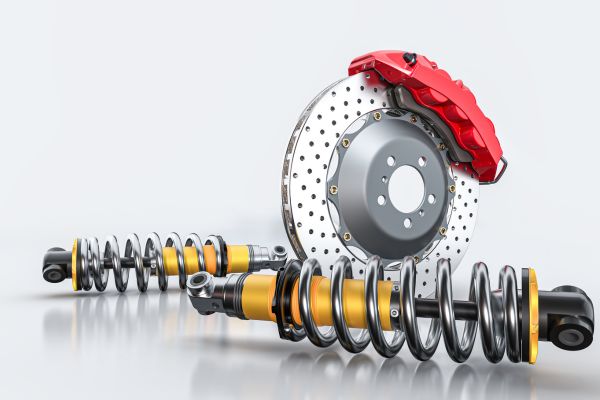
The term coilover comes from “coil spring over shock.” In a typical coilover assembly, the coil spring is mounted around the damper body, creating a compact unit that controls both ride height and suspension movement.
Many modern vehicles already use a similar spring-over-damper layout from the factory. However, aftermarket coilovers usually offer features that standard suspension systems do not. These may include adjustable ride height, selectable damping, replaceable springs, threaded shock bodies, and adjustable top mounts.
Not every coilover kit includes the same level of control. Entry-level systems may focus mainly on lowering, while more advanced setups allow separate adjustment of compression and rebound damping. Some are designed for road comfort, others for track use, and a few attempt to provide a practical balance between the two.
That distinction matters. A suspension designed for smooth roads and fast lap times may feel uncomfortable on rough city streets, even if it performs brilliantly in controlled conditions.
Sharper Cornering Response
One of the most noticeable benefits of coilover suspension upgrades is improved response when entering a corner. Factory suspension often allows a certain amount of delay between steering input and body movement. The car turns, the suspension compresses, the body rolls, and then the chassis settles.
Coilovers can reduce that delay by using firmer springs and more controlled damping. The vehicle reacts more quickly to steering input, giving the driver a stronger sense of connection with the front tires.
This does not necessarily mean the car will produce more grip in every situation. Grip still depends heavily on tires, alignment, road surface, and suspension geometry. What coilovers often improve first is confidence. The car feels more predictable because its movements are better controlled.
On a winding road, that sharper response can make the vehicle feel lighter and more willing to change direction. The steering may also feel more immediate because the body is no longer moving as much before the tires begin working.
Reduced Body Roll and Weight Transfer
When a car corners, weight shifts toward the outside wheels. During braking, weight moves forward. Under acceleration, it transfers toward the rear. Some weight transfer is unavoidable and necessary, but excessive movement can make the car feel slow to respond or difficult to balance.
Coilovers help manage this motion through firmer spring rates and improved damper control. The body remains flatter during cornering, dives less under hard braking, and squats less during acceleration.
A flatter stance can make the car feel more composed, especially during repeated direction changes. The driver does not have to wait as long for the chassis to settle before making the next input.
However, reducing body roll should not be confused with eliminating it completely. A suspension that is too stiff may reduce the tires’ ability to follow uneven surfaces. The car can feel flat while actually producing less mechanical grip. Good suspension tuning controls weight transfer rather than trying to remove every trace of movement.
Adjustable Ride Height and Vehicle Stance
For many drivers, ride-height adjustment is one of the main reasons to consider coilovers. The threaded design allows the body of the vehicle to be raised or lowered more precisely than with conventional lowering springs.
A lower center of gravity can reduce body movement and improve the car’s visual proportions. The gap between the tire and fender becomes smaller, giving the vehicle a more purposeful stance.
The key is moderation. Lowering a car too far can create several problems. Suspension travel may become limited, tires can rub against bodywork, and important geometry angles may move outside their ideal range. Ground clearance also becomes a daily concern around speed bumps, steep driveways, and damaged roads.
A sensible ride height preserves enough suspension travel for the dampers to work properly. The best setup often looks slightly less dramatic than the lowest possible setting, but it usually drives much better.
Greater Control Over Damping
Adjustable damping is one of the most useful features available on many coilover systems. Damping controls how quickly the suspension compresses and returns after encountering a bump or experiencing weight transfer.
When damping is too soft, the car may bounce, float, or take too long to settle. When it is too firm, the tires can skip across rough surfaces instead of staying in contact with the road.
Adjustable coilovers allow the driver to fine-tune this behavior. Softer settings may work better for daily use, while firmer settings can provide more control during track driving or spirited runs on smooth roads.
Adjustment should be approached carefully. Turning every control to its firmest position rarely creates the best handling. It usually makes the car harsh and can reduce traction. Small changes followed by careful road testing are far more effective than aggressive adjustments made without a clear goal.
Better Feedback Through the Chassis
A properly installed coilover setup can make a vehicle communicate more clearly. The driver may feel changes in grip, road texture, and weight transfer earlier than with softer factory suspension.
This improved feedback is especially useful during performance driving. The car gives more information about what the tires are doing, helping the driver recognize when grip is building or beginning to fade.
There is a trade-off. More feedback also means more vibration and road disturbance can enter the cabin. Expansion joints, broken surfaces, and small bumps may feel more noticeable.
For some enthusiasts, that added communication makes the driving experience more engaging. For others, particularly those who commute long distances, the loss of refinement may become tiring. The right choice depends on how much comfort the driver is willing to exchange for precision.
Improved Potential for Alignment Tuning
Some coilover systems include adjustable top mounts that allow changes to camber. Camber describes the inward or outward angle of the wheel when viewed from the front of the car.
Increasing negative camber can help the outside tires maintain better contact with the road during hard cornering. This can improve grip in performance driving, especially when combined with suitable tires and proper suspension geometry.
Yet more camber is not always better. Excessive settings can reduce straight-line traction and cause uneven tire wear. Toe settings also change as ride height and suspension position are altered, so a professional alignment is essential after installation.
Coilovers create more tuning potential, but they also make correct setup more important. A good kit with poor alignment may perform worse than a standard suspension in good condition.
The Importance of Spring Rates
Spring rate determines how much force is required to compress a spring. Higher spring rates create a firmer suspension, while lower rates allow more movement.
Manufacturers select spring rates based on the intended use of the kit, vehicle weight, suspension design, and expected road conditions. A track-focused coilover may use significantly stiffer springs than a street-oriented setup.
Choosing springs that are too stiff can make the car nervous on uneven roads. The suspension may struggle to absorb bumps, causing the tires to lose contact with the surface. Springs that are too soft may allow excessive movement and cause the car to reach the limits of its suspension travel.
Balanced spring rates help the vehicle remain controlled without becoming unnecessarily punishing. This is why brand reputation, engineering quality, and application-specific development matter more than simply choosing the stiffest available option.
Road Comfort and Everyday Usability
The effect of coilovers on comfort varies widely. Cheap systems with poorly matched springs and dampers often produce a hard, unsettled ride. Quality road-focused coilovers can remain surprisingly comfortable when adjusted and installed correctly.
The condition of local roads should influence the decision. A low, stiff setup may feel acceptable on smooth highways but frustrating on broken pavement. Potholes, drainage channels, and uneven surfaces can quickly expose an overly aggressive suspension.
Noise can also increase. Adjustable top mounts, firmer bushings, and metal components may transmit sounds that factory rubber mounts normally absorb.
Drivers who use the same car for commuting, family trips, and weekend performance driving should prioritize balance. A small improvement in comfort can be more valuable over time than the final degree of stiffness.
Supporting Components and Installation Quality
Coilovers should not be treated as an isolated modification. Worn control-arm bushings, damaged ball joints, weak wheel bearings, and tired suspension mounts can limit the benefits of the upgrade.
Installation quality is equally important. Incorrect preload, uneven ride heights, loose locking collars, or improperly tightened hardware can create noise and unpredictable handling. Brake lines and wheel clearance must also be checked carefully.
After installation, the suspension should be allowed to settle before the final ride-height adjustment and alignment. Corner balancing may also be worthwhile for serious track use. This process adjusts the distribution of weight across all four wheels to improve balance and consistency.
A careful setup takes longer, but it is what turns a box of suspension parts into a functioning performance system.
Choosing Coilovers for the Right Purpose
The ideal coilover depends on how the car will be used. A daily driver benefits from corrosion-resistant components, sensible spring rates, and damping designed for real roads. A track car may need stronger adjustment range, higher spring rates, temperature-resistant dampers, and serviceable components.
Appearance-focused builds may prioritize low ride height, but handling should still remain part of the decision. A car that looks impressive while constantly hitting bump stops is not using its suspension effectively.
It is also important to be realistic about budget. Good dampers require careful engineering, precise manufacturing, and proper testing. Extremely inexpensive kits often achieve a low stance but may struggle to provide consistent damping or long-term durability.
A More Complete Driving Upgrade
Coilover suspension upgrades can transform how a car responds to steering, braking, acceleration, and changing road surfaces. They offer greater control over ride height, damping, alignment, and chassis behavior, allowing the driver to shape the car around a specific purpose.
The greatest improvement does not come from lowering the vehicle as far as possible or selecting the firmest settings. It comes from balance. The springs, dampers, alignment, tires, and road conditions must all work together.
When chosen thoughtfully, coilovers can make a car feel more precise without removing every trace of comfort. They can sharpen the driving experience, improve confidence, and reveal a level of chassis control that factory suspension often hides beneath compromise.
The best setup is not the one that looks most extreme while parked. It is the one that feels natural, stable, and rewarding once the road begins to bend.
