

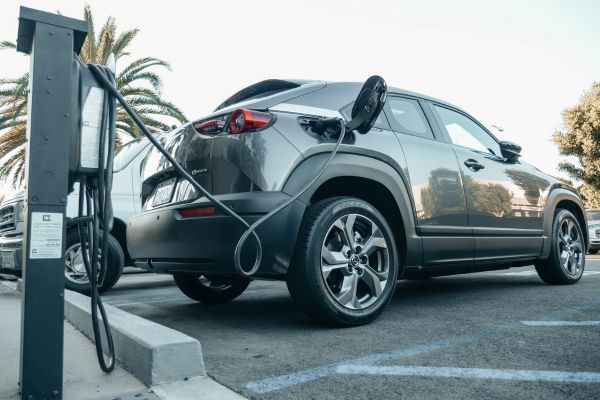
Electric cars have reached a point where range is no longer the only headline. For years, buyers wanted to know one thing before anything else: how far does it go? That still matters, of course. Nobody wants to plan every journey around a low battery warning. But in 2026, another question has become just as important. How quickly can it charge when you are away from home?
That is where the fastest charging electric cars stand apart. They do not simply have large batteries or impressive range figures. They are designed to take in energy quickly, manage heat intelligently, and make long-distance driving feel less like a waiting game. A good fast-charging EV can turn a coffee stop into a meaningful battery top-up. A great one can make electric driving feel almost effortless.
What Fast Charging Really Means
Fast charging sounds simple, but it is often misunderstood. A car’s charging speed is not just about the biggest kilowatt number printed on a spec sheet. A vehicle may advertise a high peak charging rate, but that peak might last only a short time. What matters more in daily use is the charging curve, which shows how long the car can hold strong charging speeds as the battery fills.
Most EV makers quote a 10 to 80 percent charging time. This range is used because electric cars usually charge fastest when the battery is low and slow down as it gets closer to full. Charging from 80 to 100 percent can take surprisingly long, even on a powerful charger, because the battery management system protects the cells from stress and heat.
So when people talk about the fastest charging electric cars, they are really talking about cars that combine high voltage architecture, good battery cooling, smart software, and efficient energy use. The best ones do not just hit a flashy peak. They stay quick for long enough to matter.
Why 800-Volt Architecture Changed the Game
One of the biggest reasons some EVs charge faster than others is voltage. Many early electric cars used 400-volt systems, which can still be perfectly useful. But newer fast-charging models often use 800-volt architecture or something close to it. This allows the car to accept higher charging power with less heat and lower current.
In plain language, an 800-volt EV can often move energy into the battery more efficiently at a compatible ultra-fast charger. That is why cars built on platforms from Hyundai, Kia, Genesis, Porsche, Lotus, Volvo, and other newer EV-focused brands have become so important in charging conversations.
Of course, the charger itself must also be powerful enough. Plugging an 800-volt EV into a slower charger will not magically create ultra-fast speeds. The car, the charger, the battery temperature, and the state of charge all have to work together.
Hyundai IONIQ Models and Everyday Speed
Hyundai’s IONIQ line has become one of the most recognizable examples of fast charging done well. The IONIQ 5 helped bring 800-volt charging into a more mainstream price range, while the IONIQ 6 added a sleeker, more aerodynamic shape that improves efficiency as well as road-trip usability.
The reason these cars feel so practical is not just the headline charging time. It is the way they fit into normal life. You can stop, plug in, stretch your legs, check your phone, grab something to drink, and return to a battery that has gained a serious amount of range. For many drivers, that is the difference between tolerating public charging and actually trusting it.
The larger IONIQ 9 also shows how fast charging is spreading into family-sized electric SUVs. A bigger battery usually means more energy to refill, so the charge session can take longer than in a smaller EV. Still, when a three-row electric SUV can recover a large portion of its battery during a short stop, it changes how families think about electric travel.
Kia EV6 and the Practical Side of Rapid Charging
The Kia EV6 is another important name in the fast-charging conversation. Built on related high-voltage technology, it has shown that rapid charging does not have to be limited to luxury sedans or rare performance cars. It brings fast-charging ability into a sporty crossover shape that suits everyday use.
What makes the EV6 interesting is its balance. It is quick to charge, but it is also practical enough for commuting, errands, and longer trips. That matters because fast charging only becomes valuable when the rest of the car fits real life. A car can have brilliant charging numbers, but if it is uncomfortable, inefficient, or awkward to live with, the advantage feels smaller.
For many buyers, the EV6 represents the modern EV sweet spot: enough range, strong charging performance, and a body style that works for more than one kind of driver.
Porsche Taycan and the Performance Approach
The Porsche Taycan remains one of the most technically impressive fast-charging EVs. It was one of the early production electric cars to make 800-volt charging feel like a serious advantage, and newer versions have improved battery performance, efficiency, and charging behavior.
The Taycan’s appeal is different from a family crossover. It is a driver’s car first, with charging technology that supports its long-distance performance personality. Fast charging matters here because the car invites longer, spirited drives. A short stop that restores usable range helps preserve that sense of freedom.
The Taycan also proves an important point: fast charging is not only about convenience. It is part of the car’s engineering character. Thermal management, battery chemistry, software, and hardware all have to be tuned together. When that tuning is done well, charging feels less like a separate task and more like part of the vehicle’s design.
Lotus Emeya and the New Ultra-Fast Benchmark
The Lotus Emeya has pushed the fast-charging conversation even further. With extremely rapid 10 to 80 percent charging claims under suitable conditions, it shows where premium EV technology is heading. This is the kind of car that makes people rethink how long an EV stop needs to be.
Still, ultra-fast charging claims need a little real-world caution. To reach the best numbers, the car usually needs the right charger, the right battery temperature, and the right starting charge level. Public chargers also vary. Some are limited by grid conditions, shared power, or maintenance issues.
Even so, cars like the Emeya are important because they raise expectations. They show that future EV charging could become less about waiting and more about timing the stop naturally with the rhythm of a journey.
Volvo ES90, Polestar 3, and the Next Wave
Volvo and Polestar are also moving deeper into fast-charging territory. The Volvo ES90, with its 800-volt system and strong range top-up claims, reflects a shift among premium EV makers toward faster, more efficient long-distance charging. The updated Polestar 3 also shows how software and architecture improvements can shorten charging times and make larger electric SUVs more practical.
This matters because SUVs are often heavier and less efficient than low-slung sedans. Making them charge quickly is not just a technical brag. It helps solve one of the biggest concerns families have about switching to electric power: whether long journeys will become complicated.
As more large EVs gain better charging speeds, the gap between electric convenience and petrol-car convenience continues to shrink.
Why Real-World Charging Can Be Slower
Even the fastest charging electric cars do not charge at their best speed every time. Cold weather can slow the battery. A charger may not deliver its full advertised power. The car may reduce charging speed if the battery is too hot, too cold, or already near 80 percent. Sometimes two chargers at the same site perform very differently.
Battery preconditioning helps. Many modern EVs can warm or cool the battery before reaching a fast charger, especially when the charger is entered into the navigation system. This can make a noticeable difference. Without preconditioning, even a very fast EV may charge more slowly than expected.
That is why experienced EV drivers learn to think in habits rather than perfect numbers. Arrive with a low enough battery, use a suitable rapid charger, let the car prepare the battery when possible, and leave around 80 percent unless you truly need more.
The Fastest Car Is Not Always the Best Fit
It is tempting to treat charging speed like a race. The shortest 10 to 80 percent time wins. But buying an EV is more personal than that. A car with slightly slower charging but excellent efficiency may add real-world miles very quickly. Another car may charge fast but use more energy at motorway speeds. Battery size, range, comfort, price, charger access, and daily driving needs all matter.
For someone who mostly charges at home, ultra-fast charging may only matter a few times a year. For someone who travels often, it can be a major quality-of-life feature. The best choice depends on how the car will actually be used.
Conclusion
The fastest charging electric cars in 2026 show how quickly EV technology is maturing. Models from Hyundai, Kia, Porsche, Lotus, Volvo, Polestar, Genesis, and others are proving that charging does not have to be a slow or awkward part of electric ownership. With the right car and the right charger, a short stop can add enough range to keep a journey moving comfortably.
Still, the real story is not just about the lowest charging time. It is about confidence. Fast charging gives drivers the freedom to travel without constantly calculating what might go wrong. It turns public charging from a concern into a manageable routine.
As batteries, software, and charging networks continue to improve, the best EVs will not be judged only by how far they go. They will also be judged by how naturally they fit into the rhythm of real life. That is where fast charging truly matters.
